How to Choose the Perfect Designer Blouse for a Wedding Saree
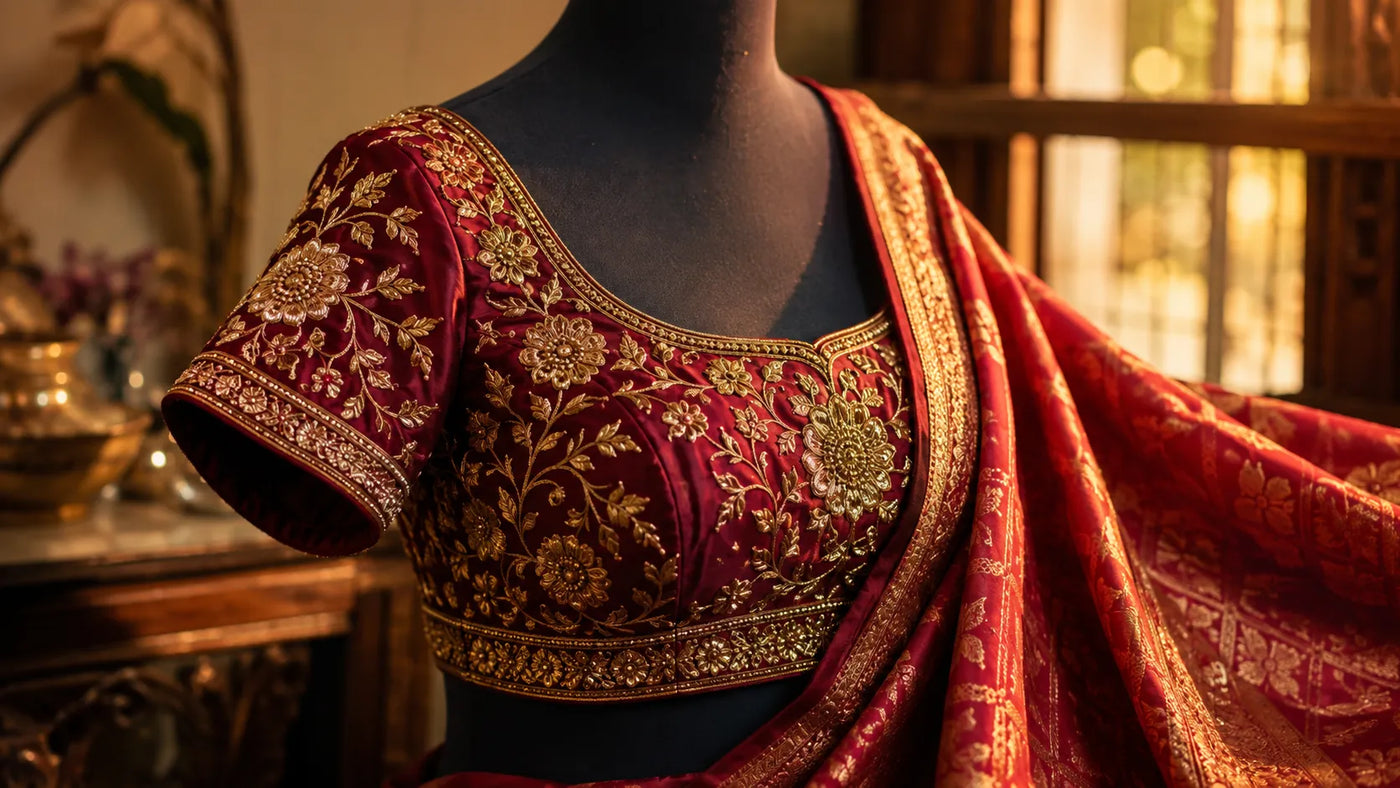
The right blouse does more work than the saree itself. It sets the neckline, frames the embroidery, and decides whether the outfit reads as bridal, festive, or understated. Before you shop for blouse color, match it to three things first: the saree's fabric weight, the occasion's dress code, and your own comfort with the neckline and sleeve length.
Match Fabric Weight Before Color
A Banarasi or Kanjeevaram silk saree with a heavy zari border needs a blouse that can hold visual weight — think raw silk, brocade, or dense hand embroidery on cotton silk. Pair a heavy saree with a plain, lightweight blouse and the outfit looks unfinished at the top. Go the other way — a delicate georgette or chiffon saree with a heavily embellished blouse — and the blouse overwhelms the drape. Kizmit's hand-embroidered designer blouses are built with this pairing logic in mind: dense embroidery on a base sturdy enough to support it.
Neckline: What Actually Suits Wedding-Length Sarees
For daytime ceremonies like haldi or mehendi, a boat neck or high halter keeps you comfortable through long hours of standing and dancing. For evening receptions, a deep V or sweetheart neckline with hand embroidery, like the Sunehra Noor Hand Embroidered Designer Blouse, photographs well under stage lighting because the embroidery catches light without competing with statement jewellery.
A halter blouse, such as the Lal Sindhoori Halter Blouse, works best when you're keeping the neck bare of a heavy necklace and want the earrings to do the talking instead.
Sleeve Length by Function
- Sleeveless — best for evening receptions and sangeet, when you want maximum embroidery visibility on the shoulders and back.
- Elbow-length — a safer choice for daytime rituals where you're seated for long stretches (pheras, griha pravesh).
- Full sleeve with cuff embroidery — increasingly popular for winter weddings and for brides who want coverage without losing the ornamentation.
Silk vs. Cotton: Match the Season and the Ceremony
Pure silk blouses hold embroidery structure best and are the standard for the wedding day itself. For pre-wedding functions or summer weddings, a cotton blouse with lighter embroidery is more breathable for a multi-hour event and easier to alter closer to the date if your measurements shift.
Get the Blouse Stitched Before the Saree Is Final
A common scheduling mistake: ordering the saree first and leaving the blouse for the last two weeks. Embroidered blouses with mirror work, dabka, or zardozi take longer to finish correctly than plain stitching. Order the blouse at least four to six weeks before the wedding date, especially for bridal pieces from the Riwayat Blouse Collection, so there's time for a trial fitting and any final adjustment.
Frequently Asked Questions
Should the blouse match the saree exactly or contrast?
Contrast blouses are more common for weddings now than exact matches. A contrasting color makes the embroidery stand out in photos and gives you a piece you can rewear with other sarees later.
How much fabric do I need for a custom blouse?
Standard blouse stitching needs about 0.8 to 1 metre of fabric, though heavily embroidered designs may need slightly more depending on the pattern placement.
Can I reuse a wedding blouse with a different saree?
Yes — a well-chosen embroidered blouse in a neutral or jewel tone works with multiple sarees. Halter and sleeveless styles are especially versatile for this.
Browse the full range of hand-embroidered designer blouses at Kizmit Designs to find a piece that matches your wedding saree and the season you're marrying in.