Hand Embroidery Explained: Zari, Dabka, and Mirror Work Decoded
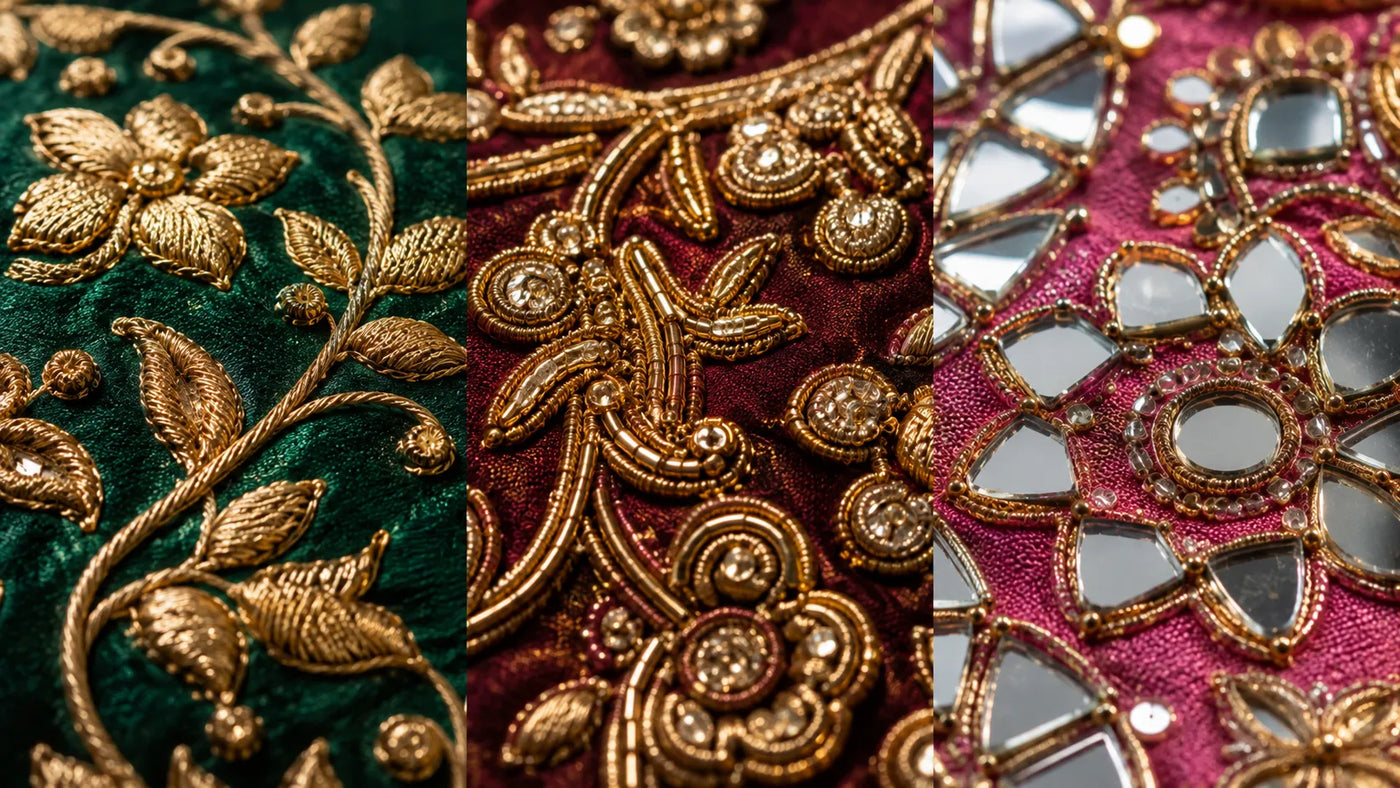
Zari, dabka, and mirror work are three of the most common hand embroidery techniques used on Indian ethnic wear, and they're easy to tell apart once you know what to look for. Zari uses metallic thread woven into the fabric for a smooth, reflective line. Dabka uses coiled metallic wire stitched down in loops for a raised, textured finish. Mirror work embeds small round or cut-glass pieces directly into the embroidery for a faceted, sparkling effect.
Zari Work: The Foundation Technique
Zari is thread wrapped in fine metal — traditionally real gold or silver, now more commonly a metal-coated synthetic — used to outline motifs, fill borders, and create the base structure most other embroidery styles build on. It produces a smooth, continuous shine rather than a raised texture, which is why zari is the default choice for saree borders and blouse edges where a subtle metallic line is enough.
Dabka: Coiled Wire for Raised Texture
Dabka is a coiled metal wire, cut into small segments and stitched onto the fabric in tight rows to build up a raised, almost 3D surface. It takes noticeably longer to execute than zari because each coil segment is placed and secured by hand. Pieces like the Noor-e-Dabka Hand Embroidered Designer Blouse use this technique specifically because dabka holds shape and catches light differently under stage or evening lighting than flat thread work.
Mirror Work: Faceted Sparkle From Glass and Thread
Mirror work — sometimes called shisha embroidery — secures small mirrors or cut glass pieces to fabric using a woven thread frame around each piece, rather than glue. This technique originated in Rajasthan and Gujarat and is common on festive and folk-inspired pieces. Genuine mirror work has visible thread stitching holding each piece in a web pattern; bonded or glued mirror discs are a sign of machine or low-cost production.
How to Spot Genuine Hand Embroidery
- Back of the fabric: Hand embroidery shows slightly uneven stitch spacing on the reverse side. Machine embroidery is uniform and often has a visible backing mesh.
- Thread tension: Hand-worked pieces have small natural variations in tightness across a motif; machine work is mechanically consistent.
- Time to produce: A single heavily embroidered blouse panel can take a skilled artisan anywhere from a few days to a few weeks, depending on density — which is part of why hand-embroidered pieces cost more than printed or machine-embroidered equivalents.
Which Technique Suits Which Occasion
| Technique | Visual Effect | Best For |
|---|---|---|
| Zari | Smooth metallic shine | Borders, everyday festive wear |
| Dabka | Raised, textured, dimensional | Bridal blouses, statement pieces |
| Mirror work | Faceted sparkle | Festival wear, sangeet, folk-inspired outfits |
Frequently Asked Questions
Is dabka work heavier than zari work?
Yes, both in visual density and physical weight. Dabka's coiled wire adds noticeable texture and weight to fabric, while zari lies flatter and is lighter.
Can mirror work embroidery be repaired if a mirror falls out?
Yes, a trained embroidery artisan can re-secure a loose mirror by rebuilding the thread frame around it, provided the surrounding fabric isn't damaged.
Does hand embroidery need special washing care?
Always dry clean hand-embroidered pieces with zari, dabka, or mirror work. Water and machine washing can tarnish metallic thread and loosen mirror settings.
See these techniques applied across Kizmit's hand-embroidered blouse collection, where each piece is finished entirely by hand.